Culture doesn’t live in surveys.
It lives in what happens after the
hire.
Culture Feedback Sidecar (CFS) turns 30/60/90/180‑day check‑ins into a light, repeatable operating rhythm—capturing signal without burden.
It closes the loop between hiring intent, manager reality, and outcomes—so every requisition gets smarter over time.
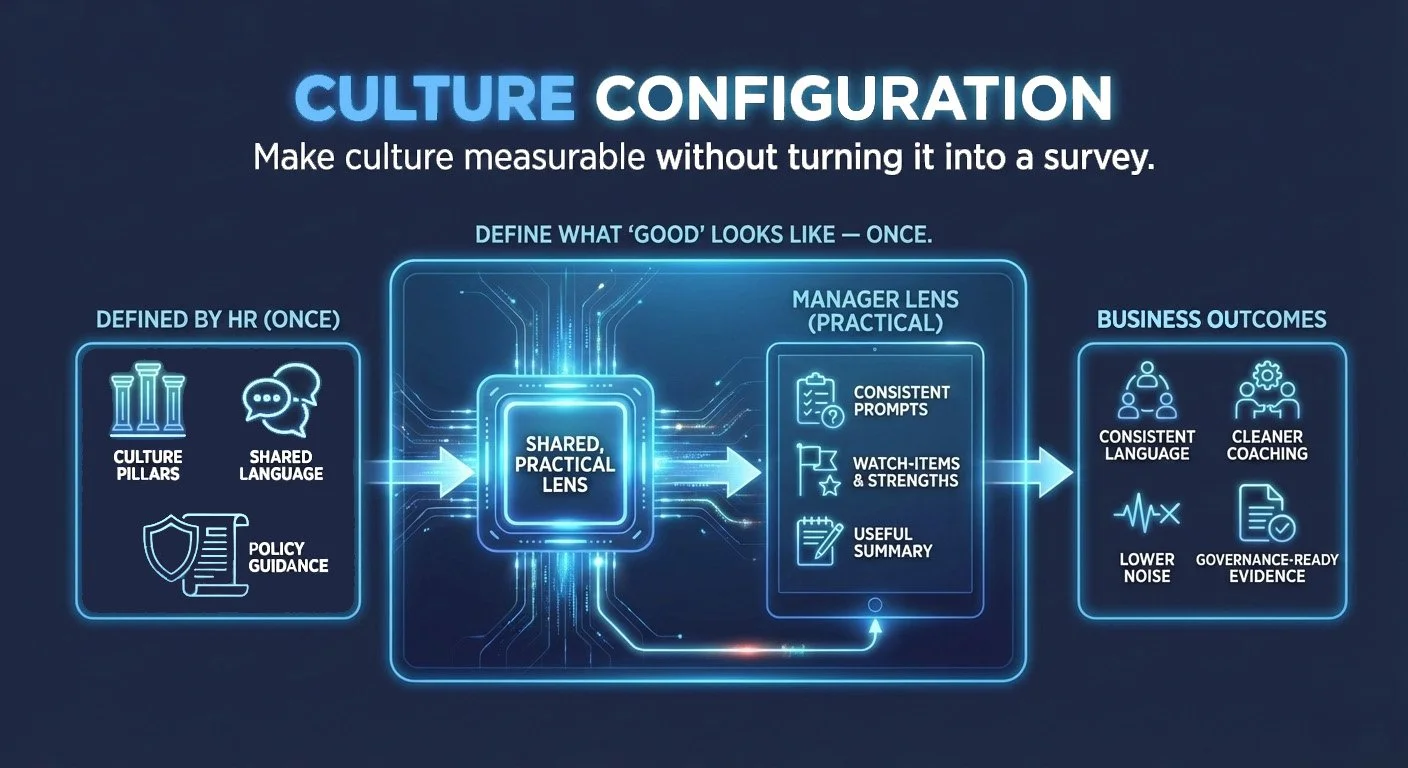
Culture configuration
Define what ‘good’ looks like — once — then let the organization learn from it.
CFS starts with a simple truth: culture is real, but it’s usually undocumented. This first scene lets HR define the pillars, the language, and the policy guidance managers see—so culture signals stay consistent across teams and clients while still evolving in a controlled way.
- HR sets culture pillars and guidance once—no more reinvention per role or client.
- Managers see consistent prompts instead of vague “culture fit” debates.
- Watch‑items and strengths become easy to capture (in minutes, not meetings).
- New leaders ramp faster because expectations are explicit.
- A consistent culture language across sites and teams—comparable, not subjective.
- Cleaner coaching because managers act on the same definitions.
- Lower noise in post‑hire discussions (fewer conflicting interpretations).
- Governance‑ready evidence: who defined what, when, and why.
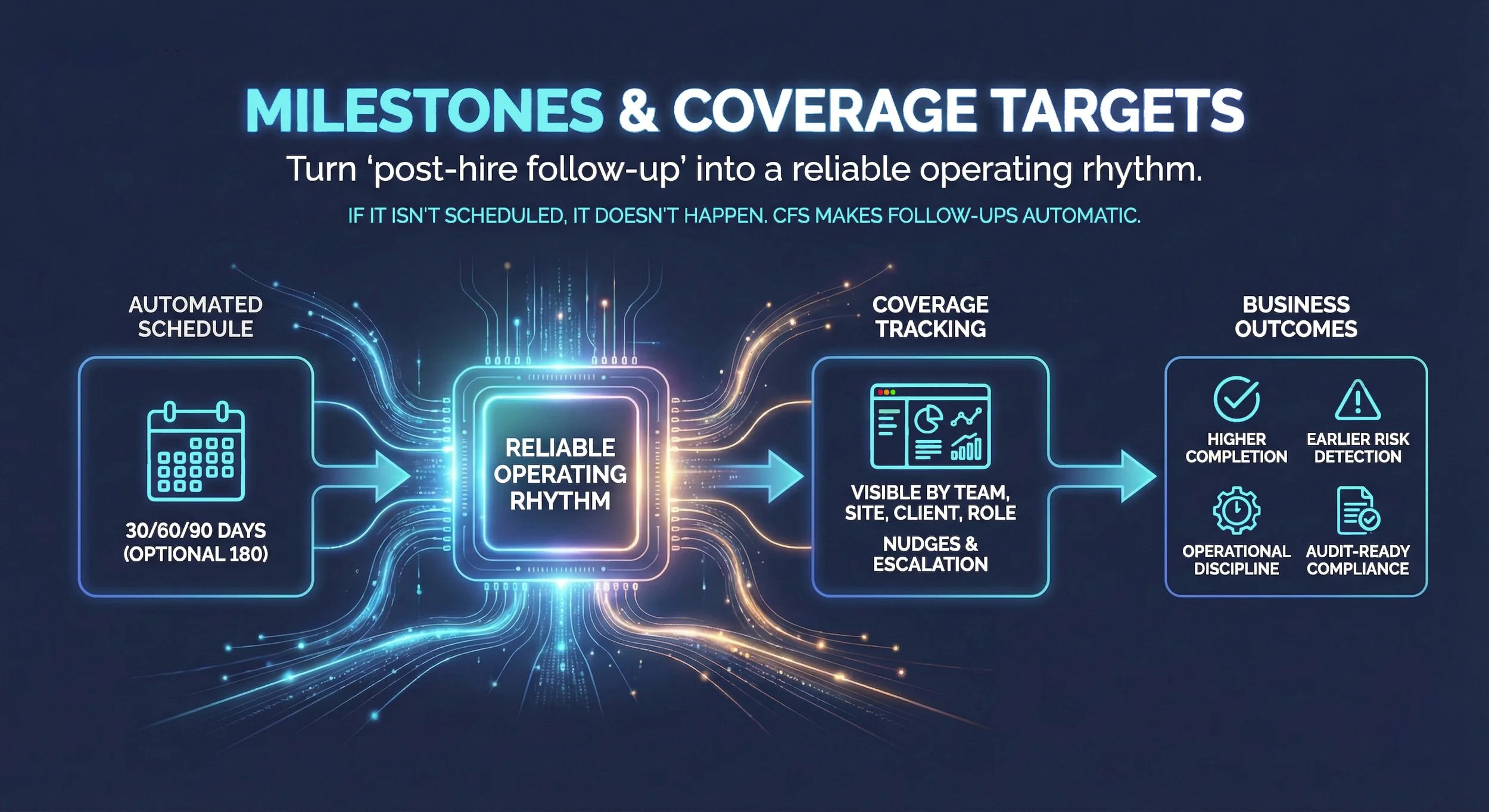
Milestones & coverage targets
If it isn’t scheduled, it doesn’t happen. CFS makes follow‑ups automatic.
Culture checks run at practical milestones (30/60/90 days, with optional 180). HR sets due windows and coverage targets so the system can track completion and nudge when needed. This is how culture becomes a repeatable habit—not an afterthought that happens only when something goes wrong.
- You stop chasing managers—tasks appear automatically when they’re due.
- Coverage is visible by team, site, client, and role.
- Overdue follow‑ups trigger nudges and escalation without awkward emails.
- You can set different rhythms per client policy or job family.
- Higher completion rates and better data quality (less missing signal).
- Earlier risk detection while issues are still fixable.
- Operational discipline across regions—without adding headcount.
- Audit‑ready compliance: due dates, completion, and exceptions are logged.
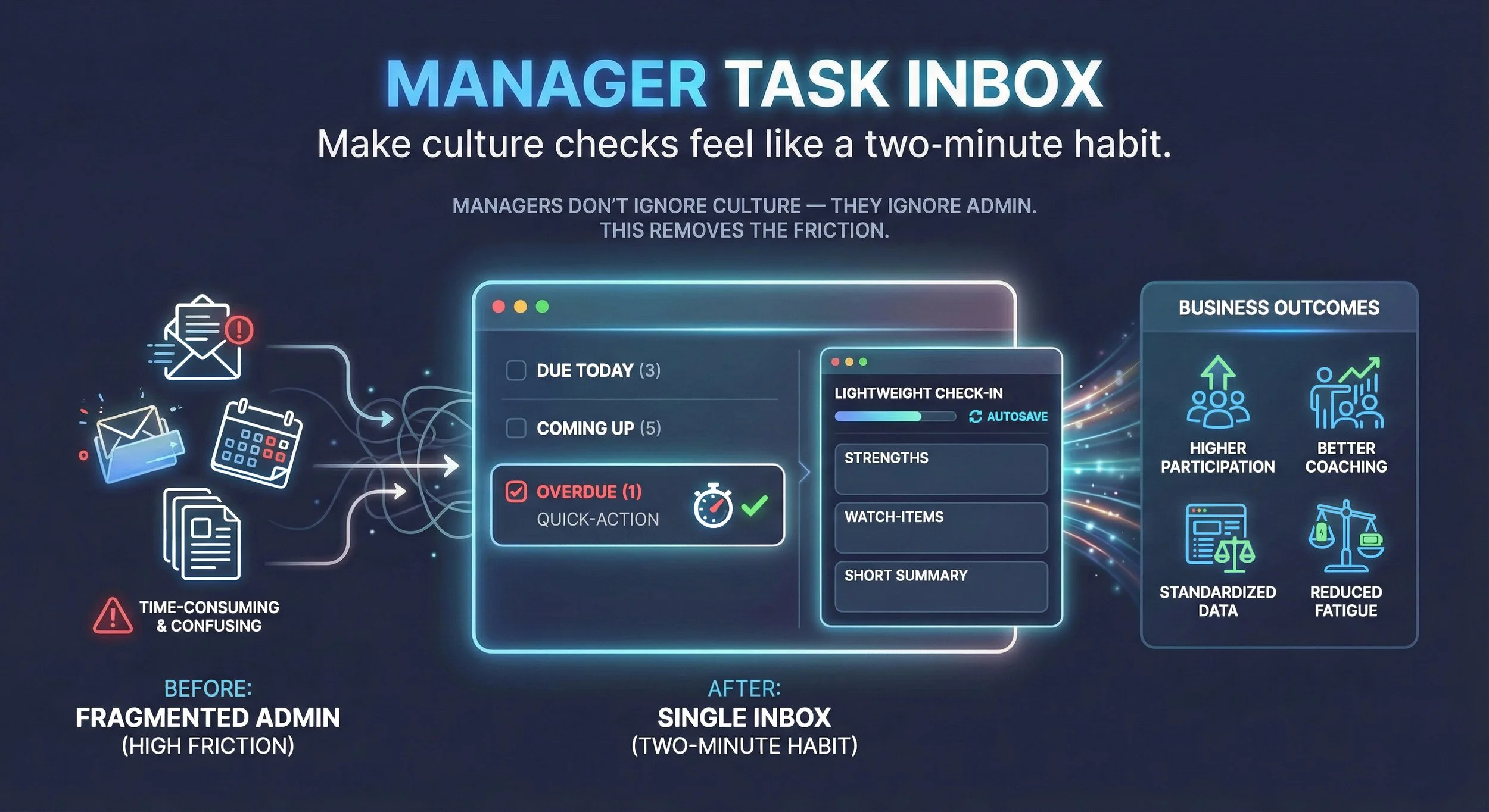
Manager task inbox
Managers don’t ignore culture — they ignore admin. This removes the friction.
CFS gives managers a single inbox: what’s due today, what’s coming up, and what’s overdue. Each task opens a lightweight check‑in with autosave and clear prompts. The aim is completion with quality—without making managers feel like they’re writing reports.
- A single place for culture check tasks (no hunting across tools).
- Two‑minute prompts with autosave—finish now or later.
- Clear, structured inputs: strengths, watch‑items, and a short summary.
- No ‘blank page’ problem—prompts guide the manager to what matters.
- Higher participation because it’s easy and consistent.
- Better coaching outcomes because signal arrives on time.
- Standardized data across teams—usable for analytics and learning.
- Reduced manager fatigue: less process, more action.
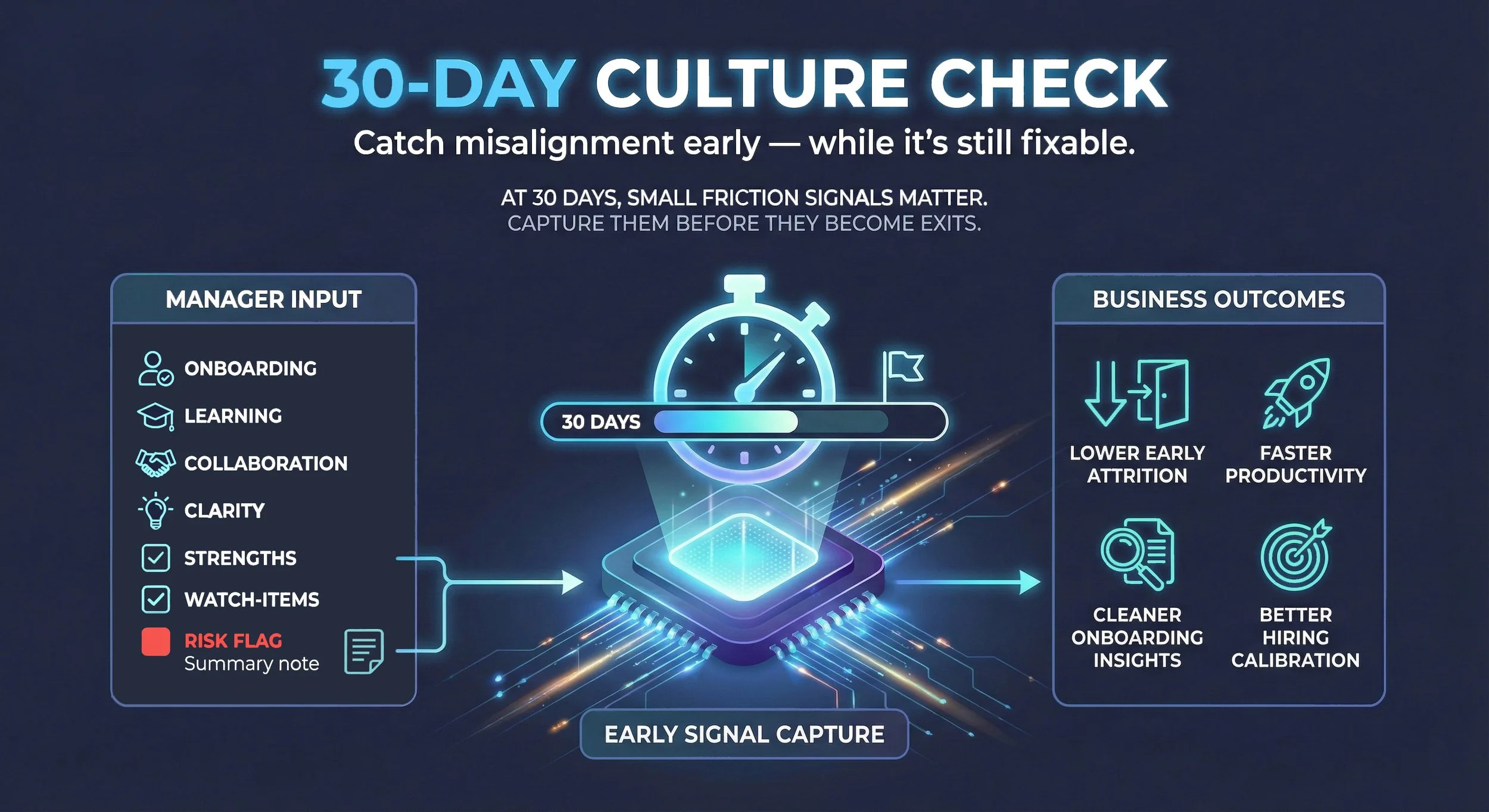
30‑day culture check
At 30 days, small friction signals matter. Capture them before they become exits.
The first check focuses on onboarding follow‑through, learning pace, collaboration, and role clarity. Managers flag early risks, mark 1–3 pillar strengths and watch‑items, and leave a short summary. This becomes the baseline for coaching—and for future hiring decisions.
- Early issues get captured as signals, not complaints.
- Managers can flag risks without escalating a ‘big HR case.’
- Coaching actions are clearer because the baseline is explicit.
- The employee experience improves because feedback arrives early.
- Lower early attrition because misalignment is addressed sooner.
- Faster time‑to‑productivity with targeted coaching.
- Cleaner onboarding insights for HR and operations.
- Better hiring calibration: what ‘good’ looks like in week 4.
60‑day culture check
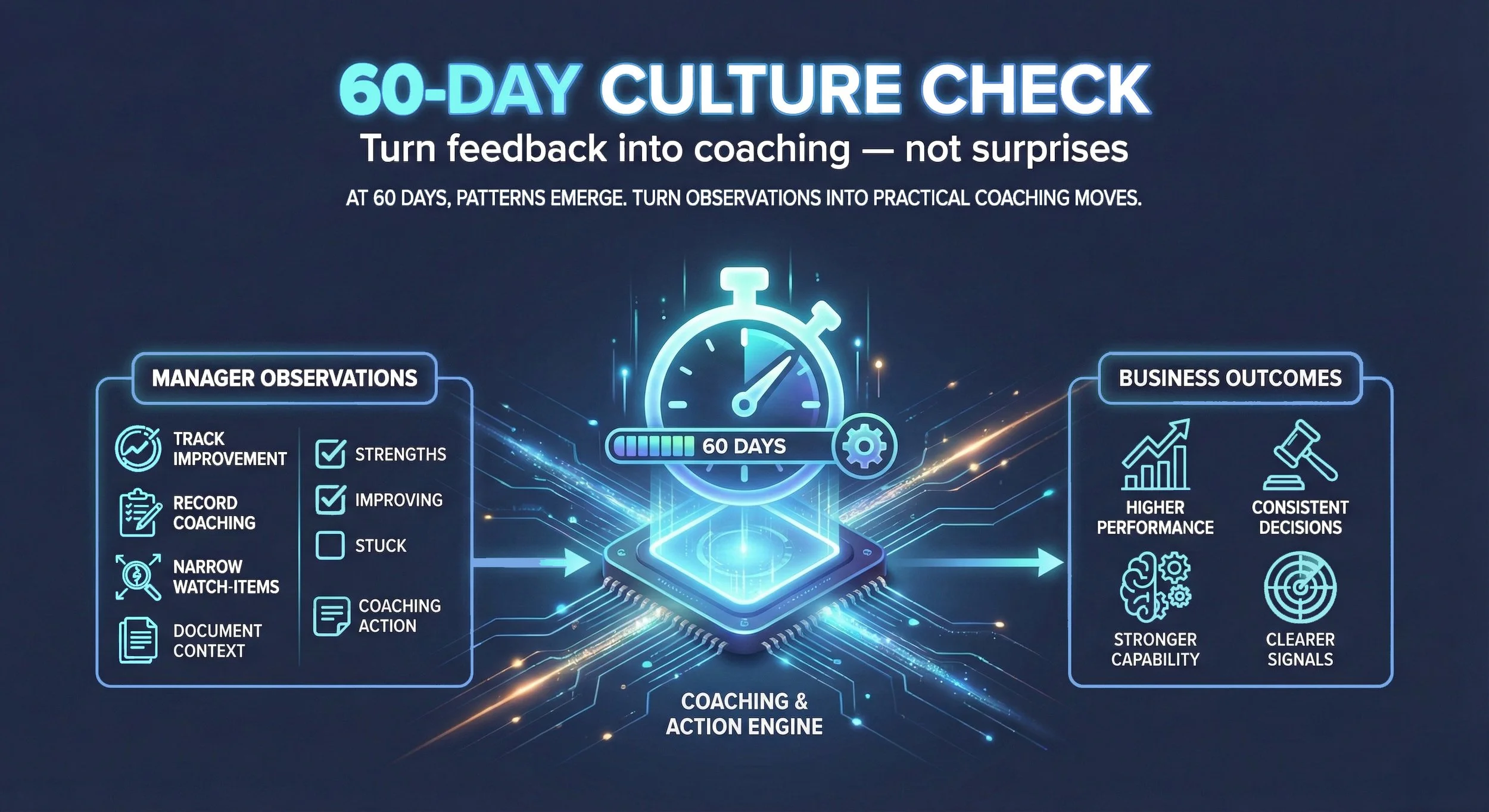
At 60 days, patterns emerge. This turns observations into practical coaching moves.
By day 60 you can see whether early watch‑items are improving, whether collaboration is stabilizing, and whether the role fit is becoming real. Managers capture what’s changing, what’s stuck, and what coaching action is next.
- You can track improvement against the 30‑day baseline.
- Managers record what coaching worked—and what didn’t.
- Watch‑items can be narrowed to the few that actually matter.
- Escalation is easier because the context is already documented.
- Higher performance outcomes because coaching is timely and specific.
- More consistent probation decisions—less gut feel.
- Stronger manager capability through structured reflection.
- Clearer signals for refining role expectations and onboarding playbooks.
90‑day culture check
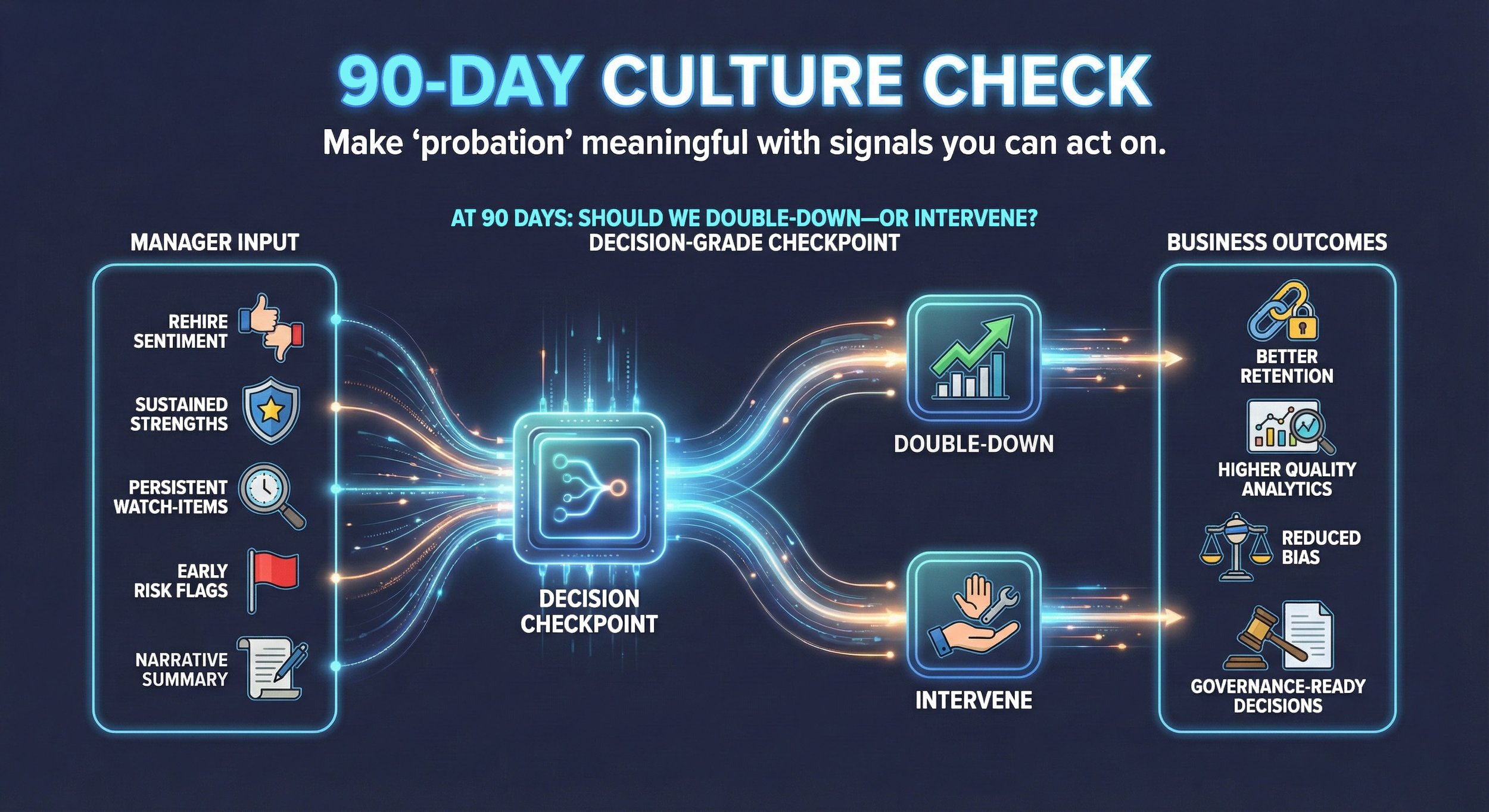
At 90 days, the question becomes simple: should we double‑down—or intervene?
The 90‑day check captures rehire sentiment, sustained strengths, persistent watch‑items, and early risk flags—paired with a short narrative summary. This is the decision‑grade checkpoint that transforms probation into an evidence‑based moment.
- Rehire sentiment becomes explicit instead of implied.
- Managers can attach context without writing a long report.
- Risks are flagged with consistency across teams and clients.
- The story of the first 90 days is preserved for future learning.
- Better retention because intervention happens before the ‘quiet quit.’
- Higher quality workforce analytics across sites and clients.
- Reduced bias through consistent prompts and structured capture.
- Governance‑ready decisions with traceable rationale.
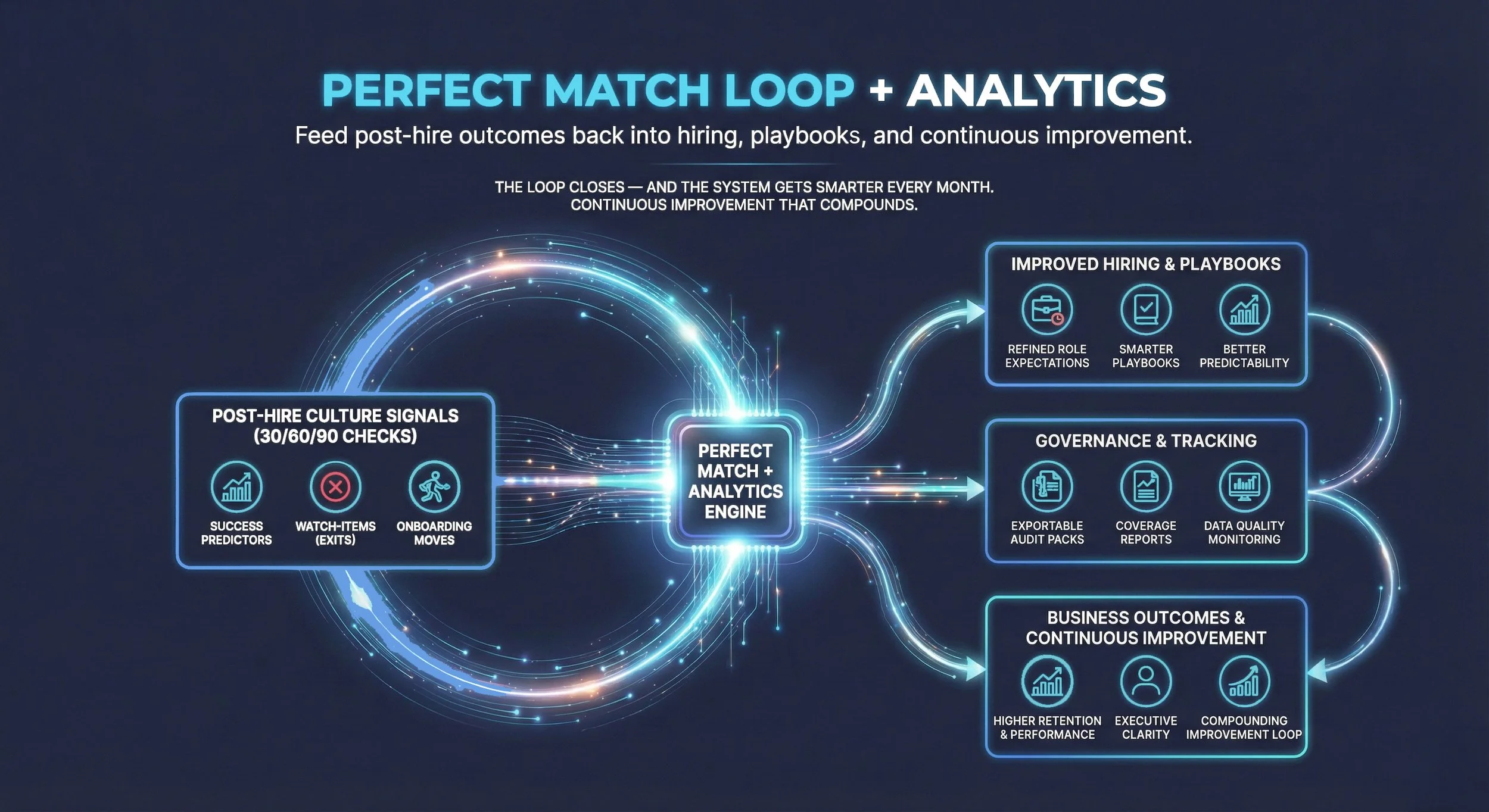
Perfect Match loop + analytics
The loop closes — and the system gets smarter every month, not every requisition.
CFS feeds culture signals into Perfect Match and recruitment analytics: which pillars actually predict success, what watch‑items lead to exits, and which onboarding moves change outcomes. Leaders get role‑level and client‑level clarity, while HR gets exportable governance packs and data‑quality tracking to keep the signal clean.
- Hiring and onboarding playbooks improve without ‘big process change’ programs.
- Role expectations get refined using real outcome data.
- HR can export audit packs and coverage reports with one click.
- Data quality is monitored (missing checks, anomalies, nudges).
- More predictable hiring because success predictors become visible.
- Higher retention and performance because coaching is targeted earlier.
- Executive clarity on what actually drives success across teams.
- Continuous improvement loop that compounds—quarter after quarter.